YouTube to start automatically labeling some AI-generated videos
Andy Ignacio — May 27, 2026
YouTube says it will flag AI-generated content
New labels for AI-generated content will appear directly on videos and Shorts as the platform expands efforts to flag realistic AI-created media.
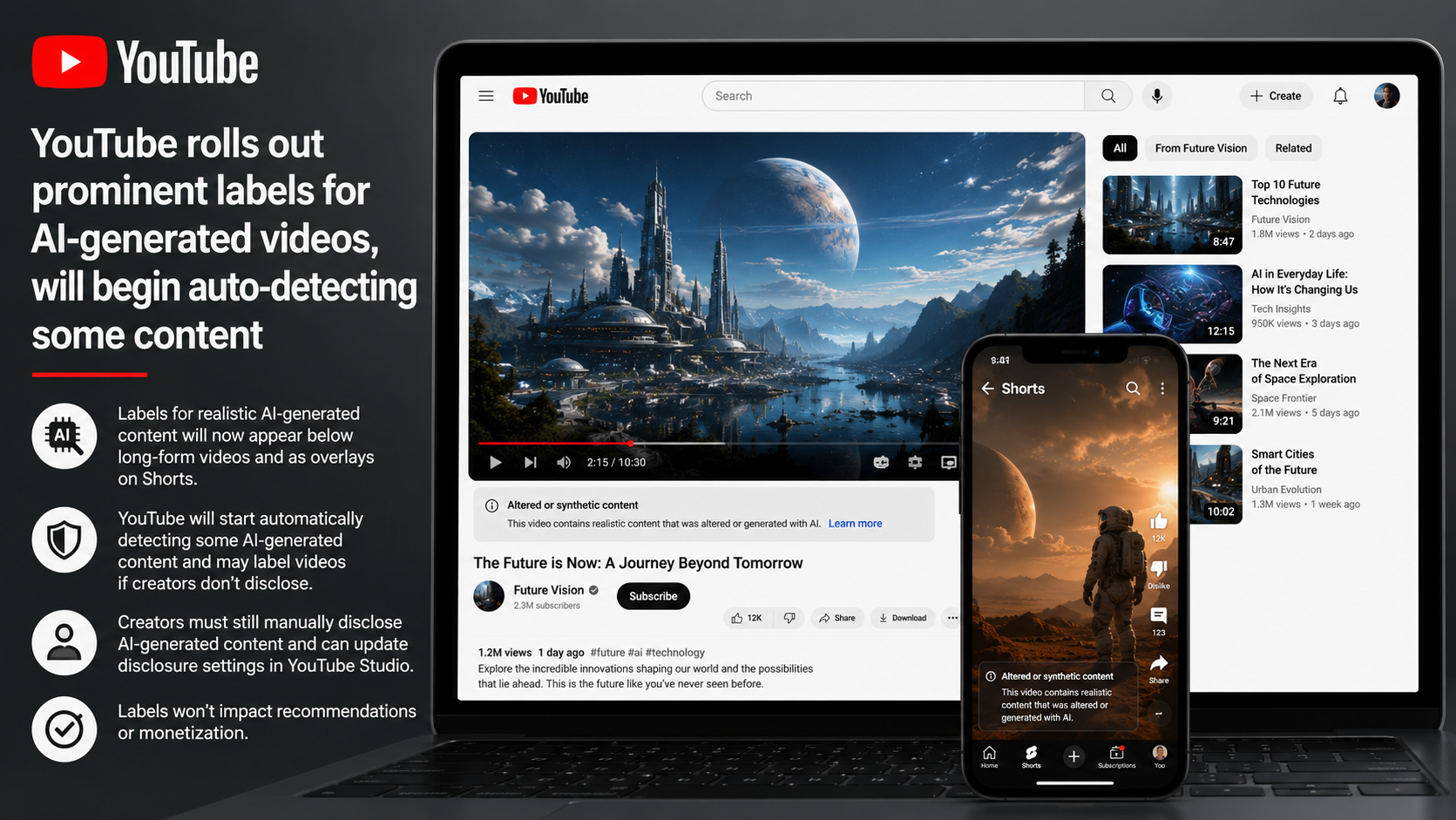
YouTube is introducing more visible labels for AI-generated videos and will begin automatically detecting and tagging some content created using artificial intelligence, the company announced Wednesday.
The move comes as generative AI tools become increasingly widespread across social media and video-sharing platforms, fueling concerns over transparency and the spread of misinformation.
Under the updated policy, labels for “photorealistic and meaningfully AI-altered or generated content” will now appear directly beneath long-form videos and as overlays on Shorts, according to YouTube.
Previously, such disclosures were only found in the expanded description section.
“We’ve heard consistently from our community that they value transparency when it comes to generative AI content,” YouTube said.
Beginning this month, the platform will also roll out internal detection systems capable of automatically identifying some AI-generated content. If creators fail to disclose realistic AI use and YouTube detects “significant photorealistic AI use,” the platform may apply labels automatically.
Creators will still be required to manually disclose realistic AI-generated material under YouTube’s existing policies.
YouTube said creators who believe their videos were incorrectly labeled will be able to update disclosure settings through YouTube Studio. However, labels will remain permanent for certain videos, including those made using YouTube AI tools such as Veo or Dream Screen, or videos containing metadata showing they were fully AI-generated.
The company clarified that the labels will not affect video recommendations or monetization eligibility.
“The goal here is context at a glance. If it looks real but was made with AI, viewers will know immediately,” said Rene Ritchie, YouTube’s head of editorial and creator liaison, in a video explaining the update.
YouTube added that disclosures for content considered “unrealistic, animated or slightly altered,” but not clearly AI-generated, will continue to appear only in the expanded description section rather than directly on the video page.