I have never considered myself a true judge of what makes music good or bad. Over the years, I’ve watched too many talented Filipino voices dismissed by local competitions, only to be celebrated in international stages. This gas taaught me a quiet lesson: like beauty is in the eyes of the beholder, music is appreciated in the ears of the listener. Its power is deeply personal, often arriving when least expected.
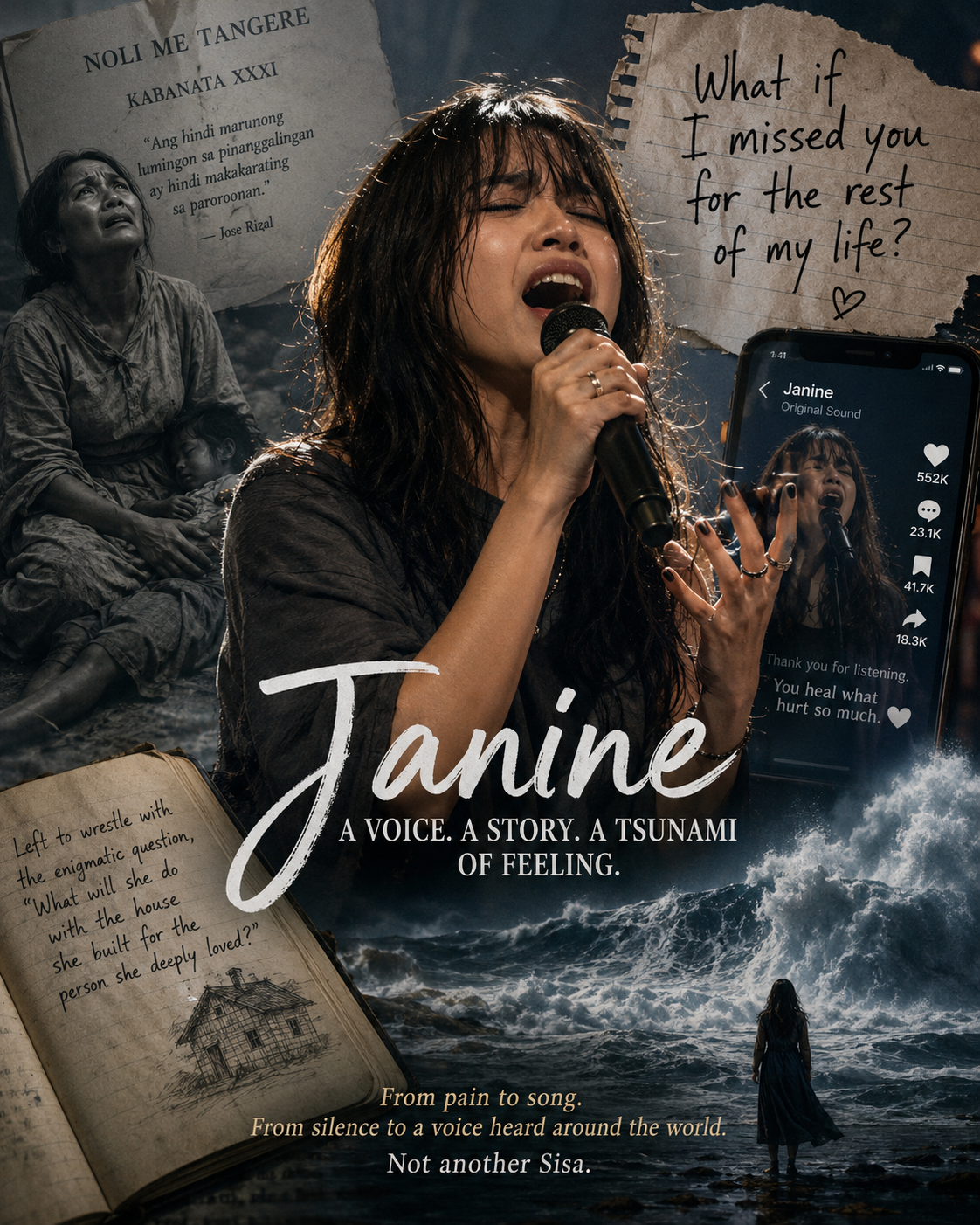
Lately, a young woman named Janine found her way into my idle moments while scrolling social media sites. The song was originally hers, not found among the OPM classics in the karaoke menu. At first, her voice - raw, shrieking, almost unhinged - was not interesting. The next day, the lyrics she delivered pierced through my guarded musical preferences and lingered. Now, I am writing about it.
What unfolded was more than her unorthodox performance. In the penultimate bridge before the song gently ebbed into its last notes, Janine unleashed something fierce and almost uncontainable - an artistic tsunami.
From soft, almost tender waves of the sea reminiscent of Hemingway’s novel, “Old Man of the Sea” her raspy voice swelled into episodes of melodic intensity that bordered on the edge of madness. Yet through the emotional storm, the words remained distinctly clear. In that moment, the air vibrated with raw unfiltered feelings - shattering the polite walls usually isolating personal and social secrets.
Listening to “What If I Missed You For the Rest of My Life?,” I found myself leaning to history. I thought of Sisa from Rizal’s “Noli Me Tangere.” The parallel is imperfect, of course. Not a foursquare comparison. Janine is only twenty four, single, a Gen Z voice with a musical talent and a social media platform, not a mother driven to madness and death for the loss of her two sons in a time of the nation’s colonial darkness. Sisa? Her struggle and voice were drowned in a sea of oppression. And yet, there is a haunting symmetry in their common suffering and emotional pain.
Both women carry the heavy weight of love denied or deprived - one forcibly taken and the other abandoned unto ignominy. Both bear the scars of rejection and emotional violence. Sisa was victim to systemic abuse and lost her mind and sons. Janine, though still alive, sings from a fragile place of abandonment. Her voice carries the ache of someone ghosted by a person she loved and once loved her. Left to wrestle with the enigmatic question, “What will she do with the house she built for the person she deeply loved?” will she go the way of Sisa? Or will her online fame cure her traumatic relationship?
I sense, there is something profoundly intriguing each time the song is sung or when I hear the song re-sung. I find each replay a re-visitation of the pain. The repetitions re-open the old wounds. The memory is refreshed. But at her viral success, she smiles. Is she stuck in the loop of pain and happiness.
Popularity, maybe, has soothed the scars that can never completely heal. Success is good for her even without closure. Sisa was however conceived by Rizal to be a reminder of the perils of being governed by an oppressive regime and perhaps, to prevent many more Sisas from dying.